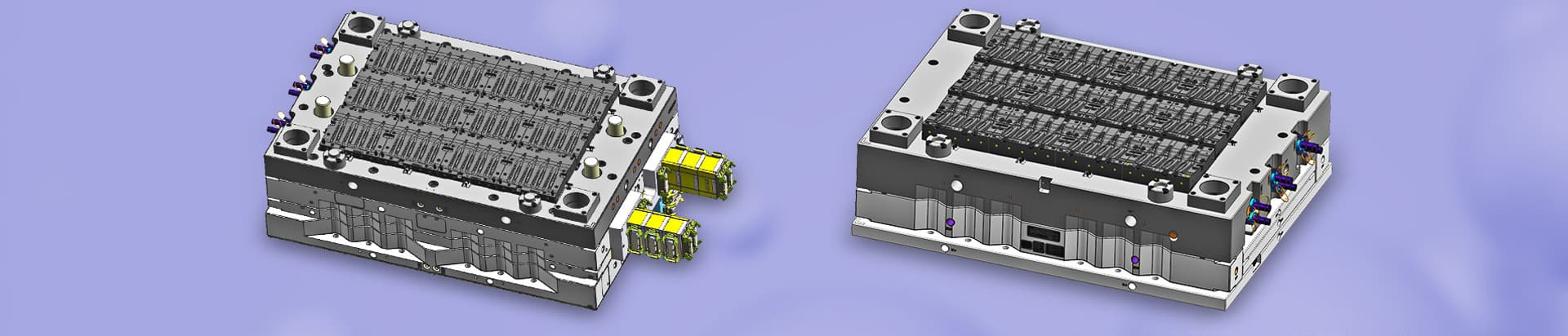
Are you curious about the weight of an injection mold? You've come to the right place! Injection molds play a vital role in manufacturing plastic components, and understanding their weight is crucial for various reasons. From determining shipping costs to optimizing mold designs, accurate weight calculations are essential for manufacturers, molders, and all stakeholders involved.
Understanding Injection Molds: A Brief Overview
Before diving into the intricacies of calculating injection mold weight, let's quickly recap what injection molds are all about. Injection molds are specialized tools used in the manufacturing process of plastic components. These molds are customized to produce specific shapes and sizes of products, ranging from automotive parts to household items. So, why is calculating their weight so important?
Estimating the weight of injection molds has a direct impact on several aspects, such as shipping costs, tooling considerations, and mold assembly. Properly understanding and managing mold weight can lead to cost savings during transportation and improved mold performance during production.
Methods to Calculate Injection Mold Weight
If you're looking for a quick estimate of an injection mold's weight, there are a few manual techniques you can rely on.
One approach involves utilizing the experience and judgment of seasoned mold designers. They can provide an approximation based on their expertise and prior knowledge of molds with similar characteristics.
Another method is to employ simplified mathematical formulas that consider the mold's geometric aspects. By adding the weight per unit area, estimations can be made. While not as precise as more advanced calculations, these formulas can still provide a useful ballpark figure to work with.
Advanced Digital Calculations
Thanks to ever-advancing technology, we have access to powerful tools that allow for more accurate and detailed calculations when it comes to injection mold weight.
Computer-Aided Design (CAD) software is extensively used in the mold design industry. By creating a 3D representation of the mold, designers can estimate weight more precisely. This approach takes into account various factors, such as complex mold features, material distribution, and the inclusion of multiple cavities.
Finite Element Analysis (FEA) is another advanced technique utilized in the mold design process. It involves simulating load patterns and evaluating the behavior of the mold. Through FEA, weight calculations become more precise, and valuable insights can be obtained to optimize designs.
Key Parameters Influencing Injection Mold Weight
The complexity of the mold's design directly impacts its weight. Mold structures that include intricate features, multiple cavities, and various design elements tend to be heavier. Consider aspects like side actions, undercuts, and sliders, which add complexity and contribute to the overall weight of the mold.
Mold Size and Dimensions
Size matters when it comes to injection molds. Larger molds, naturally, tend to be heavier. Factors like the size of the mold base, the dimensions of the core and cavity, and the overall mold thickness all influence mold weight. Understanding the implications of mold size can help optimize manufacturing processes, shipping logistics, and machine compatibility.
Material Selection
Another critical factor affecting injection mold weight is the material used. Different materials have varying densities and shrinkage rates, which directly impact the overall weight of the mold. Balancing material durability, part quality, and mold weight is crucial in optimizing production processes.
Practical Applications and Considerations
Accurately estimating injection mold weight is vital for proper packaging and cost-effective transportation. Knowing the weight upfront enables efficient handling and helps prevent damage during transit. Additionally, precise weight calculations allow for better cost estimation and budget management during the shipping process.
Cost Implications for Manufacturers
Proper weight calculation contributes to cost savings for injection moulding supplier. Accurate weight estimation ensures that mold production costs are accounted for and effectively managed. By optimizing mold weight through enhanced design considerations, manufacturers can potentially reduce overhead and increase operational efficiency.
In Conclusion
Calculating the weight of an injection mold is more than just a number on a scale. It is a crucial aspect of the manufacturing process that affects various aspects of production, transportation, and cost management. Whether utilizing manual estimation techniques or advanced digital calculations, accurate understanding of mold weight enables manufacturers, molders, and logistics personnel to make informed decisions and streamline operations.
So, next time you're faced with the weight-watchers challenge of an injection mold, don't fret. By considering mold design complexity, size and dimensions, and material selection, you'll be well-equipped to navigate this integral part of manufacturing. Happy molding and perfect custom injection molded parts!


 Call us on:
  Email Us:
  1st Floor, Block1, No.3 Beiting Road, Houting Community, ShaJing Street, Bao'An District, Shenzhen City, Guangdong Province, China
  English
 Deutsch
 italiano
 русский
 français
 română
 العربية
 Español
 Polska
 日本語
日本語 한국어
한국어